
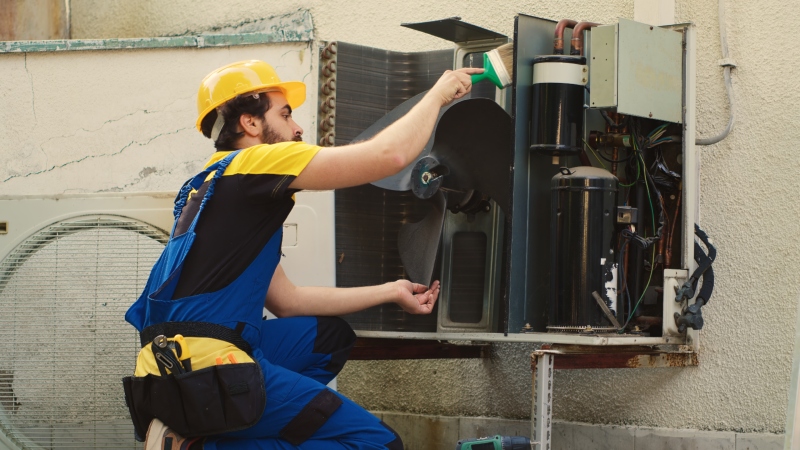
An air conditioning unit can appear functional even as several internal parts are already failing. Cold air from the vents does not prove that the system is clean, balanced, safe, or operating within the proper performance range. For property managers, facility managers, and building owners, that distinction matters. A service visit is not just a quick look at the thermostat or a filter swap. It is a structured review of the components that determine whether the system can handle demand, control energy costs, and keep occupants comfortable during long cooling seasons.
What Technicians Really Look For
-
Why Component Checks Protect Buildings
A technician starts with the overall condition of the cooling system because small clues often point to larger problems. For properties with heavy cooling demand, HVAC services for homes in Henderson are often asked to document not only whether a unit runs but also whether each component operates within a reasonable range. That kind of inspection gives building owners a clearer basis for repair, maintenance, and capital planning decisions.
-
Airflow Begins With Filters And Returns
Airflow is one of the first performance areas a technician checks because poor airflow can compromise comfort, efficiency, and equipment life. Filters are reviewed for dust loading, correct size, correct fit, and replacement condition. Return grilles and return paths may also be checked to confirm that the system is not starved for air. When airflow is restricted, the blower works harder, coils may freeze, rooms can become uneven, and energy use can climb. In commercial buildings, a clogged filter is rarely a small issue when it affects multiple offices, suites, or tenant zones.
-
Coils Reveal Heat Transfer Conditions
Evaporator and condenser coils are central to cooling performance. The indoor coil absorbs heat from the air, while the outdoor coil releases heat away from the building. If either coil is dirty, bent, blocked, or coated with debris, the system must work harder to produce the same result. A technician checks the coil’s condition, looks for signs of icing, reviews cleanliness, and may inspect whether the surrounding airflow is blocked. Dirty coils can make a system run longer, increase compressor stress, and reduce cooling capacity.
Electrical components often reveal trouble before a major breakdown occurs. During service, a technician may inspect contactors, capacitors, relays, terminals, wiring, disconnects, and control boards. Loose connections, heat marks, weak capacitors, or pitted contacts can all create unreliable operation. These issues matter because air-conditioning equipment relies on consistent electrical performance whenever the system starts or stops. A weak start component can strain a compressor. A loose wire can create heat. A failing relay can interrupt operation at the wrong time. Electrical checks help prevent minor faults from escalating into costly failures during peak cooling demand.
-
Motors And Belts Need Close Review
Blower motors, condenser fan motors, pulleys, belts, and bearings all carry mechanical load during operation. A technician checks for wear, vibration, overheating, alignment problems, and unusual sound. In belt-driven systems, belt tension and belt condition are important because a loose or cracked belt can reduce airflow or fail without much warning. In direct-drive systems, motor condition and wheel cleanliness still matter. These parts may not attract occupants’ attention until comfort drops, but they are working every hour the system runs. Regular review helps identify wear before it leads to system shutdown or reduced cooling delivery.
-
Refrigerant Readings Tell A Larger Story
If the refrigerant level is low, the system may have a leak or another operating issue that needs attention. A technician checks pressure and temperature relationships, line condition, and system behavior to determine whether the refrigerant circuit is performing correctly. Poor refrigerant performance can lead to weak cooling, frozen coils, compressor strain, and higher energy use. The key is not merely adding refrigerant. The key is understanding why readings are outside the proper range.
Air Conditioning Service remove moisture from indoor air, and that moisture must drain properly. If condensate cannot leave the system, water may back up into the cabinet, ceiling, wall, or occupied area. In commercial properties, these issues can quickly become a tenant complaint, a finish repair, an odor issue, or a moisture concern. Drainage checks are practical because they protect more than the air conditioner. They protect the building around it. A clear drain path helps the cooling system run without creating avoidable property damage.
-
Thermostats And Controls Shape System Behavior
Controls determine when equipment operates, how long it runs, and how it responds to building conditions. A technician checks thermostat settings, sensor accuracy, schedules, staging, communication signals, and control wiring where applicable. In buildings with automation systems, control problems can cause comfort complaints that appear to be equipment failures. A sensor in the wrong location may cause overcooling. A poor schedule may run equipment after hours. A failed damper command may leave one zone uncomfortable while another is over-served. Control checks help align mechanical operation with actual building use, supporting comfort and reducing wasted runtime.
-
Duct Conditions Affect Every Occupied Area
The Air Conditioning Service may be working correctly at the unit, but the duct system decides where conditioned air actually goes. A technician may check accessible ductwork for loose sections, insulation problems, leakage, damaged flex runs, closed dampers, or signs of poor air balance. Weak delivery in one area can lead to repeated complaints, even when the unit itself is cooling. Duct issues are common in buildings that have been remodeled, divided into new tenant spaces, or altered over time. Reviewing duct conditions helps property teams avoid blaming the equipment when the real problem is distribution.
Clear Inspection Creates Better Building Control
An air conditioning service technician checks much more than whether cold air is coming from the vents. Filters, coils, electrical parts, motors, refrigerant performance, drains, controls, ducts, safety devices, cabinet condition, and operating readings all shape the health of the system. For property managers and building owners, those checks turn maintenance into useful operational intelligence. They help reduce downtime, improve comfort consistency, protect equipment, and guide future budgets. A thorough service visit gives decision-makers the information they need before small mechanical issues become building-wide disruptions.